Research Seminar & RTG Day
Summer 2026
The research seminar, which regularly hosts external researchers, is open to the public. It is part of the RTG Day and will be held in LF 224 on the Duisburg Campus of the University of Duisburg-Essen (UDE) every Tuesday from 16:15 to 17:30 during the summer semester of 2026.
The easiest way to reach Duisburg Campus is by Bus #933, #926 or #920 from Duisburg Central Train Station. Please take the East Exit (Osteingang) as you leave the Central Station. You will see the bus stop for #933 and #926 when you walk about 50 meters and hit the Neudorfer Straße. You need to get off the bus at the stop “Duisburg Universität”.
21 April 2026
Room: LF 224
Duisburg Campus
Christoph E. Boehm (University of Texas, Austin)
How Responsive are Durables Expenditures to Transitory Income Shocks? (with Changseok Ma)
We estimate how expenditures on durable goods respond to transitory income shocks using variation from the Economic Stimulus Act of 2008. The estimated responses are large: Households spent about 80 percent of their stimulus payment within three months of receiving the income transfer on durables alone. Most of this spending was on motor vehicles, either financed, used, or both, and about 20 percent of the total expenditure response was on smaller items. To finance motor vehicle purchases the average household levered up by 40 cents on the dollar using vehicle loans. Our findings suggest that durable goods and their financing are key to understanding the link between current income and spending.
28 April 2026
Room: LF 224
Duisburg Campus
Andreas Link (FAU - University of Erlangen-Nuremberg.)
The Historical Roots of Vaccine Hesitancy: The Persistent Effect of the Naturopathic Movement in Germany
This paper examines the historical roots of vaccine hesitancy in Germany. Drawing on digitized from the year 1900 on the strength of the naturopathic movement — the largest movement critical of medicine, including vaccinations, at that time — we show that counties with a higher number of such associations in 1900 have significantly lower vaccination rates today. In terms of underlying mechanisms, we show that the movement changed the way health care is provided and we present evidence indicating that it affected the intergenerational transmission of norms.
19 May 2026
Room: LF 224
Duisburg Campus
Matthias Westphal (Hagen University)
Public Transportation Investments and the Rise of the Labor Movement
This paper studies how railroad expansion reshaped the political economy of nineteenth-century Germany and contributed to the rise of the labor movement. By lowering transport costs, railroads facilitated labor mobility and information diffusion, but also shifted the balance of economic and political power between workers and local elites. We ask whether improved market integration and migration opportunities translated into greater political mobilization.
To identify the causal effects of rail access, we assemble a new data set on railroad station openings and combine complementary identification strategies, including two-way fixed effects, a straight-line instrument based on predicted network routes, and simulated railroad access. Using historical data for the German Empire from 1871 to 1912, we show that constituencies gaining rail access experience higher Socialist (SPD) vote shares, higher voter turnout, and faster population growth.
We further investigate the mechanisms linking infrastructure expansion to political change. First, we examine legislative behavior using roll-call votes on Socialist policies. Second, we study the diffusion of socialist ideas through the spread of Socialist newspapers to distinguish ideological transmission from worker reallocation. Consistent with these channels, the political effects of rail access are strongest in constituencies with prior unionization, a history of strikes, and higher levels of industrialization. Overall, the results suggest that transportation infrastructure not only transformed economic activity but also helped mobilize workers politically by strengthening labor-market integration and the spread of political ideas.
16 June 2026
Room: LF 224
Duisburg Campus
Adrian Lerche (IAB)
Espionage-Based Knowledge Flows and Firm Outcomes
(with Albrecht Glitz and Lukas Mergele)
Economic espionage is a pervasive global phenomenon. We study how this activity affects the performance and production structure of firms in the perpetrating country. Exploiting historical data from East Germany that trace the flow of scientific-technical information from their sources in the West to their recipients in East Germany, we show that economic espionage increased firms’ output, productivity and exports. Our results further suggest that the technical change induced by economic espionage was factor-neutral, and that the associated productivity gains propagated through the production network via input-output linkages. In the long run, a higher inflow of espionage information was associated with a higher likelihood of successful privatization following German reunification.
23 June 2026
Room: LF 224
Duisburg Campus
Guyonne Kalb (University of Melbourne)
The effect of separation on poverty and employment
Using 2001–2021 HILDA survey data, this paper estimates how separation or divorce affects poverty and employment trajectories over five years after the event. A difference-in-differences approach compares separated individuals with couples who stayed together, accounting for recent and long-term labour market history prior to separation. Women with preschool children face a 19.9 percentage point higher poverty risk in the first year, which fades within three years. Women with older or no children experience smaller but longer-lasting poverty increases. Pre-separation employment strongly moderates effects: non-employed women face much higher poverty risks than employed women who have similar poverty risks to men. Men’s poverty impacts are smaller and shorter-lived. Separation barely changes women’s employment but slightly reduces men’s employment, especially those with preschool children.
30 June 2026
Room: LF 224
Duisburg Campus
Florian Mayneris (UQAM)
The evolution of the co-location of jobs and residents within U.S. cities
(with K. Behrens, J. Martin and F. Toubal)
We study the co-location of jobs and residents within U.S. cities and its evolution between 1990 and 2020. For 285 out of 381 CBSAs and almost all large MSAs, jobs and residents have become more co-localized. This trend is associated with a decrease in the size of establishments and a homogenization in the average size of establishments across locations within cities. We develop and estimate a quantitative urban model for Chicago %in 1990 and 2020 to interpret these facts. A structural accounting exercise shows that the increasing co-location of jobs and residents has been driven by changes in productive and residential amenities. The dispersion in the comparative advantage of locations for production relative to residence has shrunk over time, reflecting a leveling of the playing field for production within the city, and thereby increasing the prevalence of mixed-use locations.
7 July 2026
Room: LF 224
Duisburg Campus
Sebastian Ottinger (CERGE-EI: Center for Economic Research and Graduate Education - Economics Institute)
Path Dependence in Economic Geography: Theory and Evidence from Post Roads (with Gianandrea Lanzara, Matteo Santacesaria, and Elizaveta Zelnitskaia)
Do history or geography determine the location and size of cities? We offer a novel perspective on this question to reconcile conflicting views in the theoretical and empirical literature. First, we develop a spatial model of urban systems and provide a novel characterization of its equilibrium in a general geographic setting. In the model, agents with identical preferences choose where to live and work, generating an endogenous commuting partition and allowing economic activity to concentrate in a subset of locations. We show that increasing returns can produce multiple equilibria in city locations, even when the city-size distribution remains unique. Then, we propose a new identification strategy to test for path dependence in urban location. Our empirical setting is the yams system of the former Russian Empire, where post stations were placed at regular horse-changing intervals across sparsely populated areas for logistical rather than economic reasons. Combining newly digitized data from the 1777 Roadbook with modern satellite night-light data, we find that locations within the historical stopping range are significantly brighter today than nearby locations along the same routes. This persistence of quasi-random city seeds into stable modern settlements provides direct empirical validation for the multiple spatial equilibria generated by our framework. In ongoing work, we use this setting to test the model’s secondary prediction: whether fixing city locations uniquely determines their relative sizes.
14 July 2026
Room: LF 224
Duisburg Campus
Udo Kreickemeier (University of Göttingen)
Tax Progressivity and the Distributional Effects of Globalisation
(with Hartmut Egger and Miriam Kohl)
Is it a good idea for governments to have a progressive tax system in order to redistribute the gains from globalization between individuals? And if so, how progressive should the tax system be? In this paper, we give answers to these questions using a standard, firm-based general equilibrium model of international trade in which the heterogeneity of market incomes is the result of exogenously heterogenous managerial ability in the population. We introduce into this framework a tax-transfer system in which the progressivity of the tax schedule is governed by a constant marginal tax rate and an income threshold above which the constant marginal tax rate is applied, leading to average tax rates that are increasing in individual income. Opening up to international trade disproportionately benefits the highest-ability managers, and we show that progressivity of the tax schedule matters crucially for the ability of the tax-transfer system to produce equitable results of globalization.
Winter 2025
The research seminar invites external researchers on a regular basis and is open to the public. It is part of the RTG day and takes place in the Math Tower (VP87), at Technical University of Dortmund (Vogelpothsweg 87, 44227) in Room: 127 on Tuesdays from 16:15 to 17:30 during the summer term 2025. The best way to reach here is by S-bahn (S1), which has a stop at “Dortmund Universität”.
21 October 2025
Room: 127
Math Tower, TU Dortmund
Ismir Mulalic (Copenhagen Business School)
Immigrants and Native Flight: Geographic Extent and Heterogeneous Preferences
(with Bence Boje-Kovacs, Albert Saiz, Vinicios Sant’Anna and Marie Louise Schultz-Nielsen)
Is ethnic segregation in Europe driven by native flight or immigrant self-isolation? If the former, which natives avoid immigrants? Which immigrants? What is the geographic scope of homophilic residential preferences? We answer these questions using a matched panel containing the universe of individuals and properties in Denmark from 1987 through 2017. We take advantage of the quasi-random nature of refugee placements and simulated exogenous Markov-chain predictions to generate experimental variation regarding local immigrant arrivals. We find strong evidence of native flight, even at the building level. Flight is stronger among the old and a reaction to the arrival of low-income immigrants. As neighborhoods become more immigrant-dense, subsequent move-ins are more likely to be other immigrants or young, low-income native citizens without children.
28 October 2025
Room: 127
Math Tower, TU Dortmund
Amelie Schiprowski (University of Bonn)
The Effects of Reducing Mandatory Job Search in Unemployment Insurance
This paper studies the effects of a market-level reduction in job search provided by unemployment benefit recipients. We exploit a market-level policy change in Switzerland, where a subset of Public Employment Services reduced the number of required applications by 25% and abolished mandatory vacancy referrals. Using detailed administrative data and difference-in-differences designs, we find that the policy change increased the average duration of unemployment spells by about 6%, while increasing average re-employment earnings by about 2%. On the firm side, vacancy filling and posting reduced substantially.
11 November 2025
Room: 127
Math Tower, TU Dortmund
Anne Hannusch (University of Bonn)
Protection for Whom? The Political Economy of Protective Labour Laws for Women
(with M.Doepke, H.Foerster and Michѐle Tertilt)
During the first half of the twentieth century, many US states enacted laws restricting women’s labor market opportunities, including maximum hours restrictions, minimum wage laws, and night-shift bans. The era of so-called protective labor laws came to an end in the 1960s as a result of civil rights reforms. In this paper, we investigate the political economy behind the rise and fall of these laws. We argue that the main driver behind protective labor laws was men’s desire to shield themselves from labor market competition. We spell out the mechanism through a politico-economic model in which singles and couples work in different sectors and vote on protective legislation. Restrictions are supported by single men and couples with male sole earners who compete with women for jobs. We show that the theory’s predictions for when protective legislation will be introduced are well supported by US state-level evidence.
18 November 2025
Room: 127
Math Tower, TU Dortmund
Ingo Isphording (IZA)
Schools and Teacher Mental Health
(with Antonia Entorf and Miriam Gensowski)
We document elevated and rising rates of mental health-related health care utilization among primary school teachers in Denmark relative to other professions. Using rich administrative data, we show that these patterns are driven by the occupational demands of teaching—particularly high emotional labor and intense social interaction—rather than selection into the profession. Mental health outcomes vary substantially across schools, with large differences in teacher absenteeism, diagnoses, and prescription drug use. These differences are not well explained by observable school characteristics, but they correlate strongly with student-reported measures of classroom functioning and well-being. Leveraging a quasi-experimental mover design and event-study framework, we provide causal evidence that teachers’ mental health responds to school-specific environments: teachers who move from low-stress to high-stress schools experience a deterioration in mental health outcomes.
25 November 2025
Room: 127
Math Tower, TU Dortmund
Michel Serafinelli (King's College, London)
Coal Phaseout and Local Jobs
(with Daniela Sonedda)
We assess how coal phaseout affects local employment. After the industry’s rapid dissolution in Great Britain following the period 1981–1984, the number of total jobs rebounded in many areas between 1985 and 2023—often surpassing 1981 levels despite the loss of coal jobs. Notably, 58% of areas with initial high coal employment saw job growth, and 36% outpaced the national average. These findings indicate that a significant portion of affected areas successfully adapted to the coal phaseout’s negative effects. We then explore why certain affected areas rebounded, while others did not. Our analysis reveals that the impact of coal phaseout on local employment varied based on how close areas were to tertiary education institutions. In the decade prior to the coal phaseout, job growth rates were comparable between areas near and far from tertiary education institutions. However, following the phaseout, these trends diverged: places closer to tertiary education institutions saw markedly faster job growth.
2 December 2025
No RTG Day
9 December 2025
Room: 127
Math Tower, TU Dortmund
Fabian Eckert (UC San Diago)
The Housing Bottleneck
(with Shane Nordquist and Fabian Trottner)
We show that rising housing costs have sharply reduced how much of US income growth translates into higher real consumption. Measured using a price index that excludes housing, real income for the average US worker has risen by about 40 percent since 1980. Measured using a full consumption price index that includes residential rents, this gain is cut roughly in half. We refer to the fraction of income, measured in non-housing terms, that converts into real consumption when valued at the full consumption price index as the passthrough of income to consumption. This passthrough has fallen from about 0.8 in the 1980s to roughly 0.4 today. The decline reflects rents rising faster than incomes and a growing share of income devoted to housing. A simple model shows that passthrough falls when housing supply growth lags behind productivity growth in the rest of the economy. A quantitative decomposition attributes most of the decline to population growth and to households remaining in high-rent cities, where they sustain housing consumption by devoting increasingly large shares of income to rent.
13 January 2025
Room: 127
Math Tower, TU Dortmund
Markus Ludwig (Technische Universität Braunschweig)
The Dawn of Civilization: Metal Trade and the Rise of Hierarchy
(with Matthias Flückiger, Mario Larch, Luigi Pascali)
In the latter half of the fourth millennium BC, our ancestors witnessed a remarkable transformation, progressing from simple agrarian villages to complex urban civilizations. In regions as far apart as the Nile Valley, Mesopotamia, Central Asia, and the Indus Valley, the first states appeared together with writing, cities with populations exceeding 10,000, and unprecedented socio-economic inequalities. The cause of this “Urban Revolution” remains unclear. We present new empirical evidence suggesting that the discovery of bronze and the ensuing long-distance trade played a crucial role. Using novel panel data and 2SLS techniques, we demonstrate that trade corridors linking metal mines to fertile lands were more likely to experience the Urban Revolution. We propose that transit bottlenecks facilitated the emergence of a new taxing elite. We formally test this appropriability theory and provide several case studies in support.
20 January 2025
Room: 127
Math Tower, TU Dortmund
Federico Trionfetti (Aix-Marseille Université)
Geography and City Size: From the Remains of Bukhara to Modern US
(with Rocco Rante and Priyam Verma)
For the first time in the literature we estimate the contribution of spatial centrality to determine city size. We do this using archaeological data on cities of the region of Bukhara observed in the 9th CE. The unique feature of this region is that it was homogeneous in all respects (technology, amenities, climate, culture, language, religion, etc.) and has been homogeneous for the twelve centuries before the 9th CE. This homogeneity rules out confounding factors and endogeneity issues. We use a simple general equilibrium spatial model that we estimate using the method of moments. The estimated model predicts very well the 9th century city size thus showing that spatial centrality is the major determinant of city size. We find no persistence of population within Bukhara and find a shifting of cities towards economic core of Uzbekistan. We apply the estimated parameters to the United States for the 21st century and find that geographical centrality explains 20% of the variation in population shares across U.S. commuting zones.
27 January 2025
Room: 127
Math Tower, TU Dortmund
Mikael Lindahl (Gothenburg University)
Ethnic Disparities in Obstetric Care and Outcomes (with Randi Hjalmarsson, Andreea Mitrut and Yannik Obelöer)
“Ethnic Disparities in Obstetric Care and Outcomes” (with Randi Hjalmarsson, Andreea Mitrut, and Yannik Obelöer)
This paper documents and explains large ethnic inequalities in birth-related health and postnatal care between Roma and non-Roma women in Romania, highlighting how unequal treatment can arise even within a universal healthcare system. Using unique population-wide administrative hospital data linked to vital statistics, we investigate disparities in obstetric and postnatal care during childbirth. Rich fixed effects models show that Roma mothers are systematically discharged earlier, leave the hospital in worse health, and experience higher rates of obstetric trauma than observationally similar non-Roma mothers treated in the same hospitals and by the same physicians. We then exploit plausibly exogenous variation in hospital congestion to study care allocation when resources are scarce and physician discretion is most salient. The results show that crowding disproportionately reduces postnatal care for Roma patients, widening ethnic gaps precisely on highly discretionary and weakly monitored margins. A series of tests rules out alternative mechanisms such as patient behavior or informal payments, pointing instead to differential treatment consistent with ethnic discrimination or implicit bias in obstetric care provision.
3 February 2025
Room: 127
Math Tower, TU Dortmund
Ulrich Wagner (Universität Mannheim)
No Place Like Home: Charging Infrastructure and the Environmental Advantage of Plug-in Hybrid Electric Vehicles
(with Johannes Gessner, Wolfgang Habla and Benjamin Rübenacker)
Many European companies face the challenge of lowering CO2 emissions from their company car fleets. A promising lever is to increase the notoriously low electric usage of Plug-in Hybrid Electric Vehicles (PHEVs). This paper examines whether home charging infrastructure can help achieve these goals. We leverage quasi-experimental variation in the delivery and installation of home chargers to quantify the impact of this technology on energy use and CO2 emissions of PHEV company cars held by 856 employees of a large German company. Since fuel and electricity expenditures for these cars are covered by the employer, home charging mainly changes the non-monetary costs to an employee. We find that access to home charging increases electricity consumption by 317.9 ((±23.3) kWh per quarter and decreases fuel consumption by 97.97 ((±36.5) liters, reducing CO2 emissions by 38%. Moreover, access to home charging increases the employee’s propensity to choose a Battery Electric Vehicle (BEV) upon renewal of the lease by 28.4 ((±25.6) percentage points. We use these estimates to compute the private levelized abatement costs of home chargers for a range of scenarios characterizing the diffusion of BEVs and the effect of the program on vehicle choice. With current tax-inclusive energy prices, home chargers break even for the company within eight to 16 years.
Summer 2025
The research seminar invites external researchers on a regular basis and is open to the public. It is part of the RTG day and takes place in the Math Tower (VP87), at Technical University of Dortmund (Vogelpothsweg 87, 44227) in Room: 127 on Tuesdays from 16:15 to 17:30 during the summer term 2025. The best way to reach here is by S-bahn (S1), which has a stop at “Dortmund Universität”.
29 April 2025
Room: 127
Math Tower, TU Dortmund
Robert Gold
To Russia with Love? The Impact of Sanctions on Regime Support
(with Julian Hinz and Michele Valsecchi)
Do economic sanctions affect internal support of sanctioned countries’ governments? To answer this question, we focus on the sanctions imposed on Russia in 2014 and identify their effect on voting behavior in both presidential and parliamentary elections. On the economic side, the sanctions significantly hurt Russia’s foreign trade — with regional variance. We use trade losses caused by the sanctions as measure for regional sanctions exposure. For identification, we rely on a structural gravity model that allows us to compare observed trade flows to counterfactual flows in the absence of sanctions. Difference-in-differences estimations reveal that regime support significantly increases in response to the sanctions, at the expense of voting support of Communist parties. For the average Russian district, sanctions exposure increases the vote share gained by President Putin and his party by 13 percent. Event studies and placebo estimations confirm the validity of our results.
6 May 2025
Room: 127
Math Tower, TU Dortmund
Andreas Stegmann
It Takes a Village Election: Turnover and Performance in Local Bureaucracies
In many countries, local governments struggle with inefficiency and corruption, often perpetuated by entrenched elites. This paper explores how leadership changes affect local bureaucratic performance. Combining personnel and citizen surveys with a regression discontinuity design in a large sample of Indonesian villages, we show that turnovers in village elections revitalize local bureaucracies, disrupt nepotistic networks, and improve local government performance. Bureaucrats serving new leaders are more engaged and less likely to be tied to past or present village officials, resulting in a more responsive bureaucracy that interacts more with citizens and better understands their needs. This improves public service provision, measured in both administrative data and citizen surveys. Overall, our results show that leadership changes can mitigate elite capture and improve governance at the grassroots level.
13 May 2025
Room: 127
Math Tower, TU Dortmund
Erwin Winkler
Using machine learning to understand the heterogeneous earnings effects of exports
We study how the effects of exports on earnings vary across individual workers, depending on a wide range of worker, firm, and job characteristics, and their interactions. To this end, we combine a generalized random forest with an instrumental variable strategy. Analyzing Germany’s exports to China and Eastern Europe, we document sharp disparities: workers in the bottom quartile (ranked by the size of the effect) experience little to no earnings gains due to exports, while those in the top quartile see considerable earnings increases. As expected, workers who benefit the most on average are employed in larger firms and have higher skill levels. Importantly, we also find that workers with the largest earnings gains tend to be male, younger, and more specialized in their industry. These factors have received little attention in the previous literature. Finally, we provide evidence that the contribution to overall earnings inequality is smaller than expected.
10 June 2025
Ingo Isphording
Productivity Spillovers in International Teams: Insights from GitHub Activity Data
(with Felix Holub and Beate Thies)
canceled
17 June 2025
Room: 127
Math Tower, TU Dortmund
Michael Pflüger
The Costs of Urban Density: Rents vs. Home Values
This paper contributes to empirical research on the costs of urban density which is still scant. We first show that a key result of previous research, – the urban cost elasticity rises with city size –, is not a unique feature of one single country, but holds true more generally. Our main contribution is much more fundamental, however. Inspired by the finding of an independent literature which documents that the housing price-to-rent ratio is much higher in larger agglomerations than in smaller urban areas, we address the estimation of urban costs with data on both rents and home values. We find that the estimated elasticity based on housing price data is far larger than the one based on rental prices. Since the qualitative behavior of price-to-rent ratios is so pervasively similar internationally, we believe that the results that we derive for Germany, for which we have rich real estate micro-data, hold more generally, and speak to other countries as well.
24 June 2025
Room: 127
Math Tower, TU Dortmund
Efii Adamopoulou
Early Life Conditions, Time Preferences, and Savings
This study examines how early-life exposure to food scarcity influences individuals’ long-term time preferences and savings behavior. We analyze historical data on livestock availability during World War II at the provincial level, alongside detailed survey data on elicited time preferences and household savings. Using a difference-in-differences framework that exploits variation across cohorts and provinces, we find that individuals who experienced more severe scarcity in early childhood develop higher levels of patience later in life and tend to accumulate more (precautionary) savings, conditional on income. Our findings suggest that exposure to protein scarcity during early childhood and in utero can lead to a lasting increase in prudent behavior as a coping mechanism.
1 July 2025
Room: 127
Math Tower, TU Dortmund
Andrew Goodman-Bacon
The Impact of Medicare’s Introduction on Life Expectancy
(with Adriana Lleras-Muney, Joseph Price, Dahai Yue)
This paper estimates the causal effects of the introduction of public health insurance for the elderly in the US (Medicare) on mortality rates and life expectancy of the program’s early recipients. We construct a new dataset of more than 18 million individuals observed in the 1940 census linked to a death record in the FamilyTree database at FamilySearch. We identify Medicare’s average treatment effects on log period mortality rates using three pre-specified approaches: a design based on a simple theoretical model of cohort mortality, an interrupted time-series design, and a staggered difference-in-differences design. Using a 20 percent random sample or our full dataset, all three approaches show that Medicare increases life expectancy at age 55 for men born between 1885 and 1915 by 0.74 years on average, but has negligible effects for women. Medicare’s effects are larger for cohorts with more potential years of exposure and for subgroups with less education or lower income in 1940. After pre-registering the empirical methods based on the training sample, our final results will apply them to the remaining analytical sample
7 July 2025, MONDAY
Room: 127
Math Tower, TU Dortmund
Seminar starts at 12:30
Uta Schönberg
Taxing Labor: Firm R&D, Automation, and the Labor Share
(with Hyejin Ku and Ragnhild Schreiner)
We study how firms respond to increased payroll taxes using administrative and survey data from Norway. An EU-mandated harmonization of geographically differentiated payroll taxes caused uneven labor cost increases across firms. Affected firms reduced employment but increased R&D investment, pursued cost-saving process innovations, and adopted more automation technologies. Labor and total factor productivity rose, while the labor share declined. These effects persisted even after the tax hike was reversed four years later, suggesting a lasting shift toward more capital-intensive production in response to higher labor costs.
Winter 2024/25
The research seminar, which regularly hosts external researchers, is open to the public. It is part of the RTG Day and will be held in LF 224 on the Duisburg Campus of the University of Duisburg-Essen (UDE) every Tuesday from 16:15 to 17:30 during the winter semester of 2024/25.
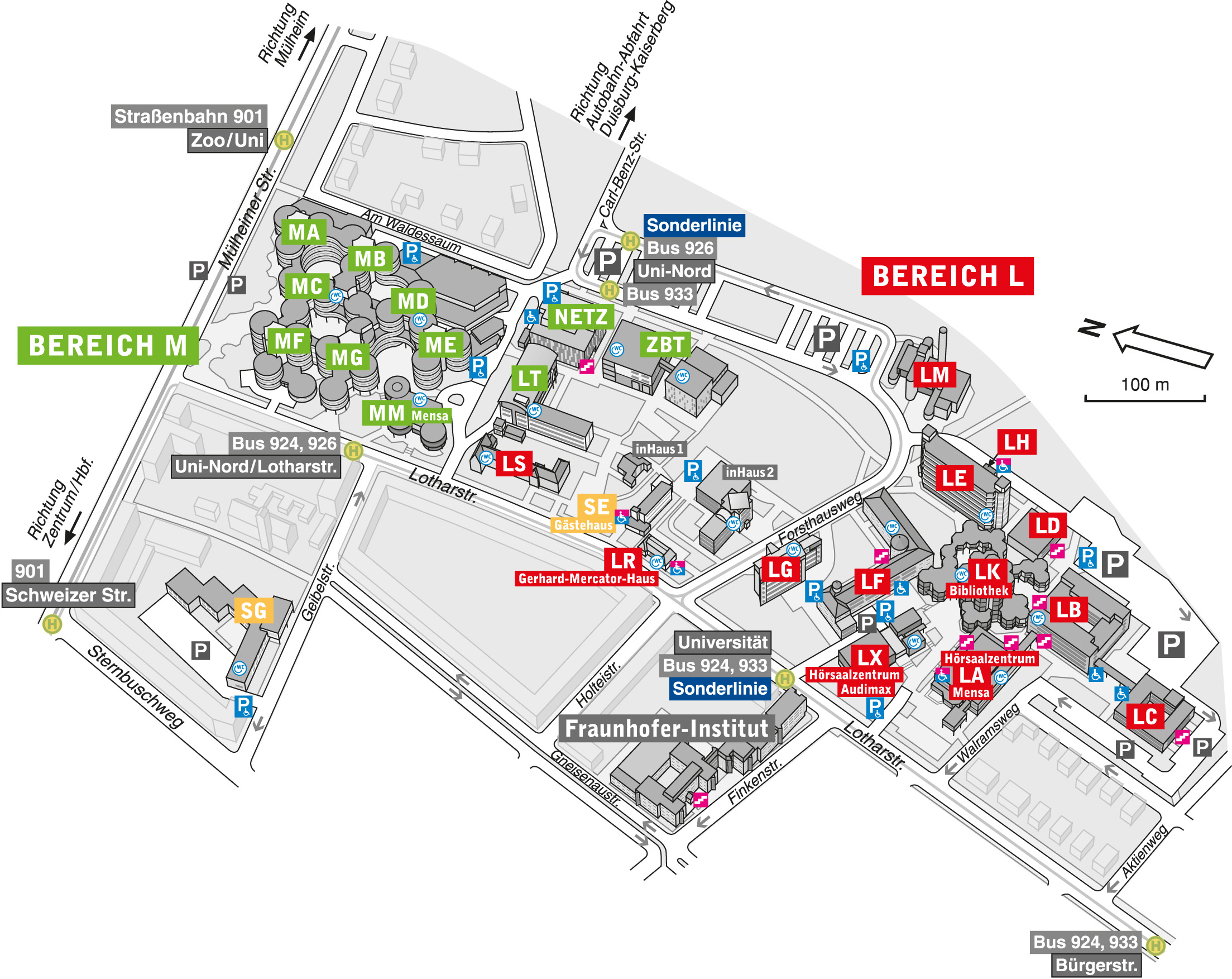
The easiest way to reach Duisburg Campus is by Bus #933 or #926 from Duisburg Central Train Station. Please take the East Exit (Osteingang) as you leave the Central Station. You will see the bus stop for #933 and #926 when you walk about 50 meters and hit the Neudorfer Straße. You need to get off the bus at the stop “Duisburg Universität”.
15 October 2024
LF 224, Duisburg Campus
Richard Murphy (University of Texas at Austin)
Losing Their Religion: State Banning of Religion, Social Norms, and Female Participation
(with Shqiponja Telhaj)
This paper studies the relationship between economic prosperity and religion through the lens of social norms. In a social equilibrium framework, where a society is one realization of many possible equilibria, we model how the Albanian government increased female participation in education and employment by changing the social equilibrium through credibly committing to communist ideals. This shift was accomplished by declaring Albania the First Atheist country in the world in 1967 and the de-sanctification of its religious buildings, excluding those deemed national cultural monuments 20 years prior. Exploiting this unique natural experiment, we use this variation in spared buildings to measure the credibility of the government’s commitment to female emancipation in each municipality. In doing so, our main focus is on citizens’ faith in the state’s commitment, rather than their faith in religion. Using forty years of hand-transcribed administrative data, we show that in the decades following the reform, municipalities in which all religious buildings were de-sanctified experienced higher growth in female schooling, labor market participation, and production. Supplementary analysis, exploiting the Demographic and Health Survey data on social norms, shows that the reform has had lasting improvement of female empowerment. We argue that the Albanian government changed social norms through the banning of religion to achieve their policy goals.
22 October 2024
Miriam Beblo (University of Hamburg)
LF 224, Duisburg Campus
A meta approach to analysing competition behavior
The labour market is marked by gender gaps in participation, earnings, and representation. Experimental studies have been investigating competition preferences as a possible source for these gaps for almost 20 years now, providing a vast collection of data (=studies) with large variation in participants, design and location. We exploit the experimental evidence on competition entry by gender in a meta approach. First, we investigate the effect size of a gender gap in competition entry, its moderators across studies and how it varies across countries at different stages of gender equality achievement. Secondly, we present the concept of a meta analysis based on the primary data level instead of the study level, since questions on efficient competition (whether those with the largest chances of winning enter the tournament) and endogenous performance (whether competition itself has an effect on performance) can only be answered with individual data.
5 November 2024
Gabriel Loumeau (VU Amsterdam)
LF 224, Duisburg Campus
The Rise of Consumer Cities: Evidence from the City of Light
(with P.-P. Combes, L. Gobillon, G. Loumeau and Y. Zylberberg)
This paper studies the emergence of a city as a center of consumption. We leverage the arrival of gas-powered lighting in Paris in 1830 to investigate the location choices and spatial complementarity of a wide range of consumption activities. We track individual places of consumption throughout the 19th century using geo-localized trade directories data extracted with advanced image recognition techniques. Our analysis underscores the pivotal role of the initial gas lines in the “City of Light” as a gravitational hub for consumer-oriented establishments such as apparel boutiques, cafes, restaurants, and merchandise vendors. These birth of bright consumption centers also triggers an urban segregation trend that barely existed before. Finally, we present additional evidence that the improved street lighting notably impacted consumption activities by and for women.
12 November 2024
LF 224, Duisburg Campus
Ana Moreno (University of Mannheim)
Delayed Childbearing and Urban Revival: A Structural Approach
(with Clara Santamaria)
Since 1980, college graduates have increasingly sorted into the downtowns of U.S. cities. This led to urban revival, a process that involves fast growth in income and housing prices downtown. Motivated by the observation that young childless households concentrate downtown, we link urban revival to delayed childbearing. As college graduates postpone parenthood, more of them are childless when young and locate downtown. Estimating a dynamic model of fertility timing and within-city location choices, we find delayed childbearing accounts for 52% of urban revival. The impact of changes in fertility choices is amplified by the response of housing prices and amenities.
19 November 2024
Vera Troeger (University of Hamburg)
LF 224, Duisburg Campus
Better Representation, More Influence? Explaining Female Marginalization in German State Parliaments
Women are still under-represented in positions of power and have limited access to the most prestigious policy areas. As a consequence, women do not have the same opportunities as men to influence policy-making. We have theoretical reasons to believe that the politics of committee assignments give room for female discrimination. We assess differences in committee membership using unique fine-grained data on members of German state parliaments from 1948 to 2016 and provide several measures of committee importance. With matching and decomposition methods we test whether observable qualifications and experience, electoral incentives and structural aspects help explain gendered committee assignments. If anything, we find that female marginalization strengthens with more women entering state parliaments. Observable characteristics and structural aspects explain these patterns only partially. We conclude that women remain systematically disadvantaged in the most relevant policy domains.
10 December 2024
Bettina Siflinger (Tilburg University)
LF 224, Duisburg Campus
The Impact of Childcare Policies on Mental Health and Education: Evidence from Subsidy Changes in the Netherlands
17 December 2024
No Seminar
14 January 2025
Sebastian Siegloch (University of Cologne)
LF 224, Duisburg Campus
Welfare Effects of Property Taxation
(with Max Löffler)
We investigate the welfare implications of property taxation. We apply a sufficient statistics approach that accounts for the distributional effects of tax changes at the household level within a spatial equilibrium framework. We show that equity effects are driven by price adjustments in the housing and labor markets, while efficiency is determined by changes in public goods. Using microdata and exploiting 5,500 municipal property tax changes in Germany, where assessed housing values remain constant, we find that 83 percent of the tax burden is passed through to rental prices, with modest labor market effects. Simulations of the welfare effects of property taxes reveal that the price effects of property tax hikes are regressive. Despite low efficiency costs of the tax, it becomes distributionally neutral only if public good preferences are very high.
21 January 2025
Gilles Duranton (Wharton School of the Univ. of Pennsylvania)
LF 224, Duisburg Campus
Urbanization and urban divergence: France 1760 – 2020
(with Pierre-Philippe Combes, Laurent Gobillon, Clément Gorin, and Frédéric Robert-Nicoud)
We use a combination of image processing and machine learning tools to extract data from historical maps of France. Granular information about the distribution of population allows us to delineate cities consistently (and relatively) over 260 years. Against a backdrop of rising population, the rate of urbanization increased, but the number of cities declined, and the size distribution of cities also became increasingly skewed. Within cities, population density rose, and its gradient flattened. To bring these facts together, we propose a model of urban divergence for which we verify further empirical predictions.
28 January 2025
Therese Nilsson (Lund University)
LF 224, Duisburg Campus
Individualism and Working from Home
(with Jan Bietenbeck and Natalie Imert)
In this paper we investigate the role of individualism in explaining cross-country differences in working from home (WFH). Using data from the Current Population Survey (CPS) of the United States and the European Social Survey (ESS), we isolate the influence of individualism by comparing immigrants from different cultural backgrounds residing in the same location. We find that a 10-point increase in country-of-origin individualism, measured on a 0-100 scale, is associated with a 3.9 percentage point (pp) higher likelihood of WFH and 1.12 more weekly WFH hours in the CPS, and a 2 pp higher likelihood of frequent WFH in the ESS. Our analysis of potential mechanisms suggests that individualism influences WFH through higher educational attainment and occupational selection.
Previous Seminars
Summer 2024
The research seminar invites external researchers on a regular basis and is open to the public. It is part of the RTG day and takes place in room Altendorfer A-B02, Essen on Tuesdays from 16:15 to 17:30 during the summer term 2024.
The Meeting Point for the RTG Scholars on the RTG Day is: WST-C 09.02 (entrance through the WST-C 09.03)
16 April 2024
Eric Hornung (University of Cologne)
NAFTA and drug-related violence in Mexico
(with Eduardo Hidalgo and Pablo Selaya)
We study how NAFTA changed the geography of violence in Mexico. We propose that open borders increased trafficking profits of Mexican cartels and resulted in violent competition among them. We test this hypothesis by comparing changes in drug-related homicides after NAFTA’s introduction in 1994 across municipalities with and without drug-trafficking routes. Routes are optimal paths connecting municipalities with a recent history of drug trafficking with U.S. ports of entry. On these routes, homicides increase by 27% relative to the pre-NAFTA mean. These results cannot be explained by changes in worker’s opportunity costs of using violence resulting from the trade shock.
23 April 2024
Martin Fischer (Lund University )
Labour market returns to compulsory schooling in the presence of school tracking
Returns to education from instrumental variable estimation using compulsory schooling reforms have been interpreted as local average treatment effects (LATE) with school dropouts as the complier sub-population. I show that within traditional European school systems employing academic tracking, compulsory schooling reforms do not necessarily warrant such an interpretation. The complier population instead includes a further, conceptually different group of students which face constraints imposed by the institutional setting. These students are unable to attend their desired amount of schooling within the non-academic track. Leveraging two quasi-experiments in Sweden, I can compare labour market returns for students who were given the option to attend one additional year of education in lower secondary school to students who were mandated to take an additional school year. Results for life-cycle earnings show that only those who were forced to stay gained large labour market returns following an additional year of schooling (12% vs. OLS returns to education of 6%). In contrast, students student who voluntarily stayed in school for another year gained substantially smaller labour market returns on average. Interpreting the results within a marginal treatment framework, students with a higher resistance to stay in school had the highest earnings gains from additional schooling. The results are in line with findings on the so-called incarceration effect and conceptually connect compulsory schooling reforms with changes in the school minimum leaving age, which naturally target drop-outs only.
30 April 2024
Patrick Lehnert (University of Zurich)
The Effect of Postsecondary Educational Institutions on Local Economies: A Bird’s-Eye View
(with Patrick Lehnert, Madison Dell, Uschi Backes-Gellner and Eric Bettinger)
Over the last 50 years, nations worldwide have established higher education institutions to stimulate local economic growth. However, empirical evidence on local economic outcomes is still scarce, mainly because of a lack of adequate data. This paper provides evidence on the expansion of branch campuses in Tennessee and Texas, two states that are representative of the underlying patterns in the U.S. as a whole. As we expect the economic effect to be very localized, we use a novel and highly disaggregated proxy for regional economic activity based on daytime satellite imagery. Applying three panel estimation methods—traditional difference-in-differences (DD), heterogeneityrobust DD, and instrumental variables (IV)—we find positive associations for Tennessee and Texas in all estimations. In Tennessee, the traditional DD approach yields an increase in GDP of 1.4 percent after a campus opens (according to our most conservative estimate) and is driven by two-year branch campuses. In Texas, this effect amounts to 5.9 percent, with both two- and four-year branch campuses contributing to it. In our IV estimations, we take advantage of local taxing regulations that influence the decision to open branch campuses in certain locations but not the local economic conditions. We use this exogenous variation to estimate causal effects and find an even larger positive effect of 12.5 percent for the most conservative estimate. Given the widespread use of higher education expansion to induce economic growth, particularly in rural areas, this paper contributes important evidence on the economic impact of such campus openings on regional economic activity.
7 May 2024
Christina Gathmann (University of Luxembourg)
AI and the Labor Market: Impact on Job Tasks, Firm Employment and Local Labor Markets
How will AI reshape jobs and labor markets, and how does its impact differ from prior waves of technological change like robots?. To answer this question, we develop new measures for the advancement of AI and robotics technologies in Europe using Natural Language Processing techniques on patent data. Combining the patent-based measures with survey data on tasks, we find that AI exposure shifts the content of jobs from non-routine abstract tasks towards routine tasks, the opposite of what is observed for robots. These task shifts occur mainly within narrowly defined occupations within manufacturing and services. Combining the patent-based measures with administrative data on establishments and workers in Germany, we find negative employment effects for AI whereas robots negatively affect low-skill employment but increase medium- and high-skill employment. We also investigate the employment and wage responses in local labor markets using a shift-share design. In both manufacturing and services, AI reduces employment for medium-skill workers, while robots replace mostly low-skilled workers in manufacturing.
14 May 2024
Raoul van Maarseveen (University of Cologne)
Urbanization and educational attainment: evidence from Africa
Despite the rapid urbanization of the developing world, little remains known about how urban residency and migration affect childhood outcomes. Using census data for 14 African countries combined with an age-at-move design, I show that childhood exposure to cities significantly increases primary school completion and literacy rates of children, even for poor urban households. The availability of schools and the lower opportunity costs of education appear to be the main factors explaining the higher education attainment in urban regions. The paper thus provides evidence of a novel channel through which urban migration can promote economic development in developing countries.
11 June 2024
Eric Maurin (Paris School of Economics)
Sick of Working from Home?
Driven by new information technologies, working from home has experienced unprecedented growth since the COVID pandemic. We contribute to the debate on the consequences of this development by drawing on a French reform conducted in 2017, with the aim of facilitating telework agreements between employers and employees. We show that the reform was followed by a boom in working from home, particularly in mid-level occupations. On the other hand, employees in lower-level occupations were virtually unaffected. By comparing occupational groups before and after the reform, in firms that have signed telework agreements and in firms that have not, we find that the development of working from home coincides with a significant deterioration in the health status of mid-level employees, particularly men. Wages and number hours worked, on the other hand, remain largely unaffected.
18 June 2024
Christian Traxler (Hertie School)
Swiftness and Delay of Punishment
(with Libor Dušek)
This paper studies how the swiftness and delay of punishment affect behavior. Using rich administrative data from automated speed cameras, we exploit two (quasi-)experimental sources of variation in the time between a speeding offense and the sending of a ticket. At the launch of the speed camera system, administrative challenges caused delays of up to three months. Later, we implemented a protocol that randomly assigned tickets to swift or delayed processing. We identify two different results. First, delays have a negative effect on payment compliance: the rate of timely paid fines diminishes by 7 to 9% when a ticket is sent with a delay of four or more weeks. We also find some evidence that very swift tickets – sent on the first or second day following the offense – increase timely payments. These results align with the predictions of expert scholars that we elicited in a survey. Second, speeding tickets cause a strong, immediate, and persistent decline in speeding. However, we do not detect any robust, differential effects of swiftness or delay on speeding. This challenges widely held beliefs, as reflected in our survey. Yet, we document large mechanical benefits of swift punishment and provide a theoretical framework of learning and updating that explains our findings.
25 June 2024
Kristina Strohmaier (University of Duisburg Essen)
Tax Enforcement Spillovers – Evidence from Business Tax Audits in South Africa
(with Nadine Riedel and Collen Lediga)
Taxpayer audits are key instruments to combat tax evasion. Whether they deter tax non-compliance beyond audited taxpayers is largely unclear, however. Drawing on rich tax administrative data for South Africa, we show that business tax audits enhance the tax reporting compliance of unaudited firms in the same local network as the targeted business. On average, firms’ reported tax liability increases by 1% when a business in close proximity (located within a 100m radius) undergoes an audit. This estimate translates into sizable aggregate revenue gains, as audited firms are linked to numerous neighbors. Additional analyses show that audit spillovers emerge across a larger spatial scale within industry and tax preparer networks. Our findings carry important implications for the design of tax enforcement policies.
9 July 2024
Sebastian Findeisen (University of Konstanz)
Family-Friendly Workplace Policies
(with Julián Costas-Fernández, Anna Raute, Uta Schönberg)
The literature has studied the willingness to pay for family-friendly amenities, but less is known about the supply side and the incentives for firms to provide these amenities. There are two main incentives for firms to offer family-friendly workplace policies. First, such amenities may increase employee retention or reduce the duration of labor market breaks after the arrival of children. Second, if some workers are willing to pay for these amenities, firms can offer them to attract new workers.
Our study utilizes German matched employer-employee data combined with detailed survey panel data on firm provision of childcare to examine these motives. We find that firm-provided childcare enhances retention and shortens labor market breaks for mothers, especially for high-wage mothers. It also contributes to employment growth, disproportionately driven by firms attracting female talent. These findings can be rationalized through a stylized model of imperfect competition in the labor market, where family-friendly workplace policies are modeled as an amenity with direct production benefits.